

Heads Up: Petty Frustration and Property Disrespect
Buckle up, this one involves a classic case of property encroachment and missing common sense. Expect a ride fueled entirely by petty frustration.
Meet our main character, an everyday homeowner just trying to park their vehicle in peace, who finally had enough of playing the accommodating neighbor.
The Full Story: When Does ‘Cordial’ Become a Doormat?


Consider this: you step outside, expecting to get into your car, only to find an impromptu lumber yard explicitly set up to draft its debris over your property. The sheer audacity of the neighbors being surprised by a confrontation here is frankly baffling. It takes an astounding level of entitlement to treat another person’s parking spot as your personal dropcloth.


The hollow “sorry” uttered after hours of active disregard is perhaps the most irritating part of this dispute. Justice requires more than empty words, especially when the perpetrators literally had their own backyard available for this project. While the homeowner worries they overreacted over washable dust, the true offense here isn’t the mess, it is the absolute, unapologetic lack of respect for established boundaries.
The Deep Dive: The Anatomy of a Driveway Takeover
The Cast Breakdown: Who Was the Sawdust Smuggler in Disguise?
- The Reluctant Enforcer: The historically tolerant resident who finally hit their absolute limit. They’ve played the game of neighborly give-and-take for years, but watching their personal property become a canvas for carpentry waste was the definitive final straw.
- The Oblivious Encroachers: These are individuals who operate under the assumption that shared space means their space. They wield a breathtaking sense of entitlement that allows them to inconvenience others without a second thought, and they possess the gall to feign surprise when called out.
The Core Issue: Why This Problem Happens Everywhere
We see this flavor of boundary-stomping in almost every neighborhood. It begins with small liberties, a trash can here, a stray firework there, and balloons into full-blown property disrespect. It is infuriatingly common because entitled people consistently mistake a neighbor’s quiet politeness for a permanent license to do whatever they please.
Plot Hole Check: Is This Story Too Wild to Be Real?
This dilemma passes the fairness sniff test with flying colors. There are no cartoonish villains trying to steal a mortgage, and there are no millions of dollars on the line. It is just a highly plausible, incredibly aggravating tale of low-stakes suburban friction and remarkably poor manners. The details feel firmly grounded in reality.
The Final Update: Did the Dust Ever Truly Settle?
What Happened Next
The conflict ended precisely where it started: at a tense standstill. With no grand interventions or dramatic neighborhood association fines, the situation concluded as a low-severity, unresolved stalemate of rejected apologies and lingering resentment.
The Hard-Earned Lesson
Let us be perfectly clear: an apology is merely a manipulation tactic if it isn’t backed by actual consideration. The moral here is that establishing firm boundaries is essential, and you are under no obligation to forgive someone who is only sorry they got caught treating your property like a landfill. Sometimes, standing your ground is the only fair response.
Community Reactions: Examining the Jury’s Verdict on Driveway Etiquette
One could argue that baking peace offerings for people who just trashed your property is taking neighborly goodwill too far. True fairness certainly does not require rewarding blatant entitlement with a fresh batch of cookies.


This reader correctly identifies the fundamental principle of restitution in any dispute. A verbal apology is merely hot air unless it is immediately followed by a broom and a bucket of water.


The physical consequences of this encroachment extend beyond a mere dirty windshield, as this commenter astutely notes. It is grossly unfair to expect a homeowner to breathe in another person’s woodworking debris on their morning commute.


While threatening an immediate lawsuit might lean toward the extreme end of the spectrum, the underlying demand for accountability is entirely justified. One cannot simply hijack a shared space and expect to neatly evade liability for the resulting damages.


We must clarify a critical distinction here: shared access does not equate to an exclusive right to operate a private, open-air lumber yard. This perspective misses the simple fact that reasonable shared use never includes covering another person’s vehicle in waste.


Delivering a split verdict here unfairly equates an entitled property violation with a completely justified reaction from the victim. Maintaining neighborhood harmony should never mandate that you silently accept profound disrespect.













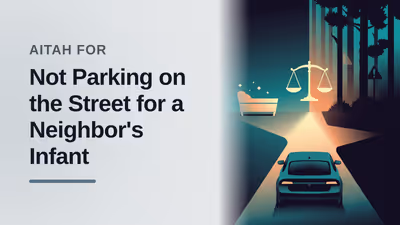


One could argue that a good neighborly relationship is built on a delicate scale of give and take. You bring in the bins, they let a stray firework slide. But setting off explosives in someone’s yard while they mistakenly think the house is empty? That is our first clue that this scale was already tipping dangerously toward entitlement.